
Echoes of the Ancient Pulse: The Hidden Structure Behind Drum-Based Sound Healing
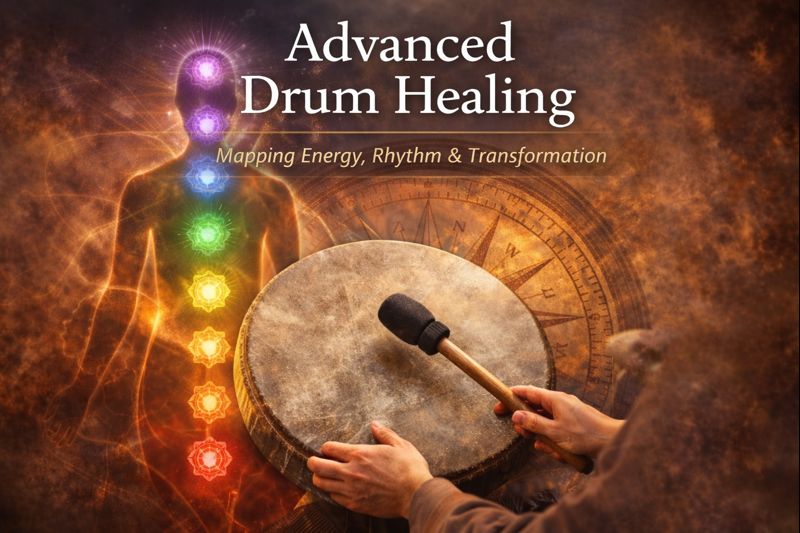
Rhythm is older than language.
Before humans carved symbols into stone or shaped bowls from metal, we were listening to the beat of rain on earth, the pulse of blood in our veins, and the footsteps of animals across the land. The drum is a continuation of that memory — a container where sound, body, spirit, and direction come together in one instrument.
While many people experience the drum as grounding or energizing, there is a deeper framework behind how rhythm supports transformation. In professional sound healing practice, the drum is not played randomly — it is directed, intentional, and responsive. Rhythm shapes emotion, direction shapes focus, and tempo shapes the nervous system.
This article brings forward the essential elements of drum work that often remain unseen, yet make the practice reliable, safe and transformative.
1. The Drum as a Vessel of Life: Skin, Tree & Memory
Every traditional drum carries the imprint of two forms of life:
the animal whose skin vibrates and the tree whose body holds the frame.
For practitioners, this history is not decorative — it changes how the drum is approached.
The drum is treated as a partner, not an object.
Many healers speak of the drum as a living archive, holding:
- the resilience of the animal
- the growth of the tree
- the memory of the soil and rain
- the presence of ancestral hands that shaped it
When played with intention, the drum becomes a bridge between inner and outer worlds, and its voice carries a depth that synthetic sound cannot fully replicate — even if modern drums can be equally useful for ethical and practical reasons.
The point is not superstition — it is relationship.
A practitioner listens not only to the drum’s sound, but to its being.
2. Rhythm as a Map of the Energy Body
Every chakra responds differently to rhythm and direction.
In sound healing practice, rhythm is not only a beat — it becomes a navigational system that directs attention through the subtle body.
| Energy Center | Directional Focus | Rhythm Style | Purpose |
|---|---|---|---|
| Root | West | Steady pulse | Grounding, stability |
| Sacral | South | Playful patterns | Emotional movement |
| Solar Plexus | East | Rising rhythms | Activation & confidence |
| Heart | Within | Heartbeat style | Connection & compassion |
| Throat | Lower | Structured sequences | Communication, clarity |
| Third Eye | North | Sparse patterns & pauses | Insight & intuition |
| Crown | Upper | Fast steady trance beat | Expanded awareness |
This system allows rhythm to shift consciousness intentionally, rather than emotionally pushing or randomly stimulating.
A practitioner can:
- anchor energy downward through the root
- liberate emotional flow through the sacral
- awaken inner strength through the solar plexus
- soften and open through the heart
- support expression through the throat
- clear perception through the third eye
- lift awareness through the crown
This is not symbolic — clients consistently report matching sensations, even without knowing the framework.
3. Tempo & the Nervous System: Why Rhythm Regulates
Steady repetitive rhythm entrains the autonomic nervous system:
- heart rate synchronizes
- breath deepens
- brainwaves shift
- muscular tension releases
For many clients, the effect is similar to meditation —
but easier, because the body follows rhythm instinctively.
Slow repetitive rhythms are used to:
- reduce anxiety
- support grounding
- calm racing thoughts
Moderate ascending rhythms are used to:
- activate presence
- awaken energy
- counter emotional numbness
Fast rhythmic repetition at 160–240 bpm can:
- shift awareness inward
- open trance states
- support journey work when appropriate
Tempo becomes medicine — not by force, but by resonance.
4. Safety & Contraindications: Rhythm Without Harm
Power without responsibility becomes harm.
For this reason, professional drumming requires awareness of:
- volume (never overwhelming)
- tempo (no sudden changes without grounding)
- client history (trauma, anxiety, sensory sensitivity)
- consent before activation
- clear boundary between stimulation & regulation
- space for silence after intensity
Responsible practice includes recognizing when to slow down, stop, or return to grounding instead of pushing forward.
A safe session does not overwhelm.
It supports the client’s inner pace.
5. Rhythm & Emotional Release: When Words Are Not Enough
Some emotions cannot be spoken.
Drumming gives the body a way to move what is stuck, without demanding explanation.
Clients may:
- sigh or breathe deeply
- feel heat releasing
- experience tears gently rising
- feel impulses to move or stretch
- become aware of old memories without being overwhelmed
The practitioner’s role is not to interpret —
but to hold space while energy shifts naturally.
The goal is not catharsis — the goal is integration.
6. Resonance as Feedback: Listening Beyond Hearing
A drum is not only used to affect energy —
it can also assess it.
When a practitioner plays around the client’s body, changes in resonance reveal:
- areas where sound expands (open, balanced)
- areas where sound feels dull (dense, blocked)
- areas of sharp resonance (overactive or agitated)
- spaces where the rhythm disappears quickly (low vitality)
- places where rhythm feels absorbed (emotional holding)
The drum becomes a diagnostic mirror, showing how energy responds — without needing verbal analysis.
7. The Role of the Practitioner: Intention, Presence & Responsiveness
A drum session becomes transformative not only because of rhythm, but because of:
- the practitioner’s grounded presence
- their ability to listen
- their willingness to adjust
- their capacity to stay calm when emotions rise
Practitioner qualities include:
- slow breathing
- attentive awareness
- stable posture
- unforced intuition
- gentle leadership
The drum reflects what the practitioner holds inside.
8. Session Flow: Opening, Transformation, Integration
A complete drum-based sound session often follows three stages:
- Opening
- slow rhythms near root and feet
- invitation to breath and arrival
- grounding presence
- Transformation
- rhythmic variation through the energy centers
- supportive activation or emotional movement
- listening for resonance feedback
- Integration
- spacious slow rhythm or silence
- allowing insights to settle
- guiding energy downward again before closing
This structure aligns with both safety and depth, balancing transformation with containment.
9. Aftercare: The Quiet That Follows Rhythm
When rhythm stops, integration begins.
Clients often benefit from:
- drinking water slowly
- walking in nature
- journaling feelings
- resting in silence
- avoiding immediate stimulation
- noticing dreams or inner imagery the following days
The work continues after the sound fades.
Closing Thought: Why the Drum Still Matters
The drum brings us back to what is simple and real — breath, heartbeat, presence, movement.
It supports grounding without trapping, activation without chaos, emotion without collapse.
In a world full of noise, rhythm becomes a guide back home.
Not to escape life —
but to feel it more fully.
Is there a difference between traditional ceremonial drumming and modern therapeutic drum sessions, or do they affect the body in similar ways?
And I’d be interested to learn whether the tempo of the drum is more important than the type of drum itself?
Great questions. Both traditional ceremonial drumming and modern therapeutic drum sessions can influence the body in similar ways by supporting relaxation, rhythmic entrainment, and nervous system regulation. The main difference is in the intention and context. Traditional ceremonies are often rooted in specific cultural and spiritual practices, while therapeutic sessions are usually designed with a focus on wellbeing, stress reduction, and emotional regulation. Both approaches can be meaningful when practiced with respect and awareness.
Tempo generally has a greater influence than the type of drum when it comes to the body’s immediate response. Slower, steady rhythms often encourage relaxation and can support brainwave and breathing entrainment, while faster rhythms may increase alertness and energy. That said, the drum itself also contributes through its unique tone, resonance, and overtones, which can create different emotional qualities. In practice, it’s the combination of rhythm, sound, intention, and the listener’s individual response that shapes the overall experience.