
The Rhythmic Path: Drums as Bridges Between Sound, Body & Spirit
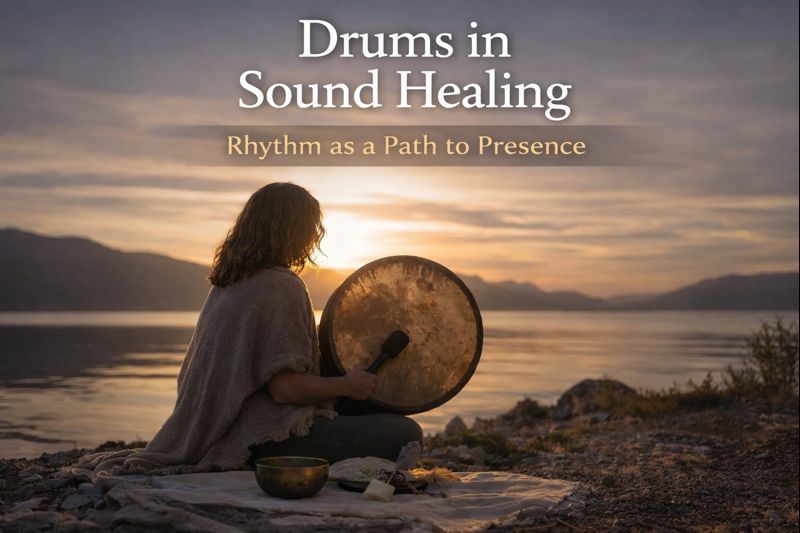
Drums have been part of human life longer than written history. Before we shaped metal into bowls or tuned strings to scales, we were striking stretched skins across wooden frames, following the pulse of our own hearts. The drum is not only an instrument—it is one of the earliest technologies for altering consciousness, stabilizing emotions, and restoring connection to ourselves and to something greater.
In modern sound healing, the drum continues to carry this role. Its voice is simple—just membrane, frame, and movement—yet within that simplicity lives a powerful tool for grounding, emotional release, and transformation.
Why Rhythm Speaks Directly to the Body
Our nervous system is built on rhythm. Breath, heartbeat, walking, sleeping—all are cycles, patterns, repetitions. When we listen to a steady drumbeat, our physiology responds:
- breathing slows
- heart rate adjusts
- brainwave activity shifts
- muscular tension lets go
Because of this direct pathway, drumming can support people who struggle to relax through silence or more ethereal instruments. The drum guides the body first, and the mind follows. It is a sound that organizes, aligning the listener with a clear sense of presence and safety.
Grounding Through Repetition
One of the strongest qualities of drum work is its grounding effect. A steady, repeating rhythm does not push the listener outward—it draws them inward. Clients often describe this as:
- “I felt like I came back into my body”
- “I could finally feel my breath all the way down”
- “My thoughts were still moving, but they didn’t control me anymore”
In sound healing sessions, this grounding quality is essential.
It anchors the client, helping them feel held and supported before deeper emotional or energetic processes unfold.
A Feminine Lineage Behind the Frame Drum
Across ancient cultures, the frame drum was frequently played by women—not as entertainment, but as part of ceremonies, rituals, and rites of passage. Its circular form and warm resonance connected it to the feminine, the cyclical, and the intuitive. Even today, many practitioners feel that the drum carries the memory of these traditions:
a connection to the womb, the heartbeat, and the energy of Mother Earth.
This lineage does not need to be repeated exactly to be respected.
Every modern player feels this history through the way the drum supports emotional expression, nurtures sensitivity, and opens intuitive pathways.
A Tool for Trauma, Tension & Emotional Holding
The rhythmic nature of the drum can help release energy that has become frozen or stagnant, especially in people who carry unresolved experiences. A gentle but firm beat gives the body permission to move internal weight—sometimes emotionally, sometimes physically.
In many sessions, people do not “think” about their process; they feel it. Drumming supports this because rhythm does not demand interpretation—it invites the nervous system to unwind at its own pace.
Practitioners often use drums when working with:
- stress and anxiety
- disconnection from the body
- difficulty grounding after trauma
- emotional heaviness
- low energy or lack of vitality
- excess activity in the mind
The drum does not ask for verbal explanation. It creates space for release without words.
How Drums Complement Other Sound Tools
In a complete sound healing session, the drum can work as an opening, a transition, or a closing:
| Phase of session | Purpose of drum | Effect |
|---|---|---|
| Opening | Grounding rhythm | Helps client arrive into their body |
| Middle | Pulse or heartbeat patterns | Supports emotional movement, balances energy |
| Closing | Softer, slower rhythm | Gathers attention, integrates experience |
Unlike singing bowls, gongs or overtone-rich instruments, the drum does not overwhelm the sound field. Instead, it structures it, giving clear shape and direction to the energetic journey.
Drumming as a Two-Way Relationship
Working with the drum is not mechanical—it is relational. Practitioners often describe the drum as a partner rather than a tool.
Some speak to their drum, some place intentions within it, and many report that over time the drum feels alive with memory, emotion and presence.
Whether a drum is made from natural skin or modern materials, players often sense a spirit or character in the sound itself. This presence seems to intensify when intention and care are involved.
Playing for Yourself vs. Playing for Others
When played for personal practice, the drum can:
- stabilize emotions
- support meditation
- help return to breath
- clear internal frustration or agitation
When played for others, the drum becomes a carrier of space and attention. The practitioner listens, adjusts rhythm and intensity, and follows the client’s emotional and energetic needs.
A good drummer in healing work is not focused on performance—they are in service of the listener’s inner process.
Where Rhythm Meets Spirit
Different traditions explain this connection in different ways:
some speak of spirits, others of energy, others of the subconscious mind.
But in all of them, the drum is seen as a vehicle for travel—not necessarily literal journeys, but movement within oneself.
Rhythm opens a doorway that silence cannot.
It reminds us that life is pulse, and pulse is life.
Why Drums Still Matter Today
In a world filled with digital noise, the simplicity of the drum is refreshing.
It is one of the few instruments that allows us to:
- feel connected without complexity
- listen without needing meaning
- release without thinking
- come back to ourselves without getting lost
This is why drums remain central in many modern sound healing practices.
They are ancient, but not outdated—simple, but not simplistic.
And in the right hands, they can reconnect a person to the most essential rhythm of all:
their own heartbeat.