
Best Instruments for Beginners— And Why They’re Ideal for Starting Your Sound Healing Journey
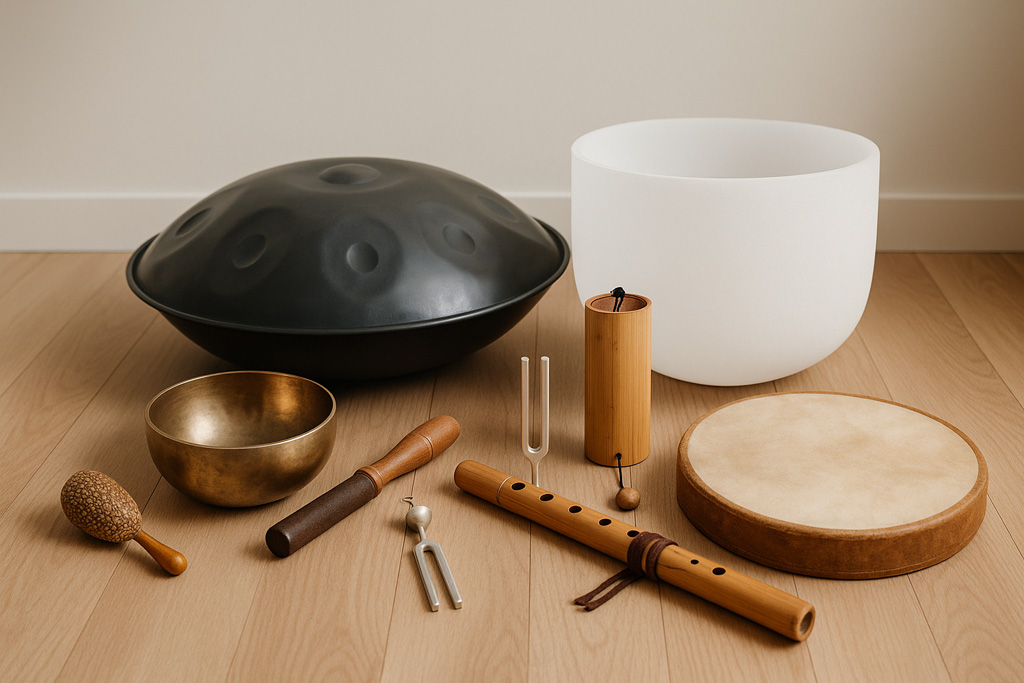
Choosing your first sound healing instrument can feel overwhelming. The market is full of bowls, flutes, gongs, drums, and tuning forks — each with its own purpose and personality. The good news is that not all tools require experience or musical training. Some instruments are incredibly intuitive, affordable, and powerful, making them perfect for beginners.
Below is a curated guide to the best beginner-friendly instruments, chosen for ease of use, therapeutic value, and versatility.
1. Tibetan Singing Bowls
Why they’re perfect for beginners:
- Easiest to learn — most people produce a tone in minutes.
- Very forgiving: even imperfect playing still sounds calming.
- Produces grounding frequencies ideal for meditation and relaxation.
- Affordable entry-level options available.
Benefits:
- Reduces stress and anxiety by creating slow rhythmic vibrations.
- Supports mindfulness and breath awareness.
- Works well for personal use, yoga classes, or small sessions.
Beginner Tip: Choose a medium bowl (6–9 inches) for the best balance of ease and resonance.
2. Crystal Singing Bowls
Why they’re ideal:
- Produce clear, powerful tones that instantly fill a room.
- Perfect for chakra-focused or energetic work.
- Easy to play — light pressure with the mallet produces a strong frequency.
Benefits:
- Uplifting sound that supports emotional release.
- Great for individual healing or group meditations.
- Excellent tool for breathwork guidance.
Beginner Tip: Start with one bowl in a tone you connect with, rather than a full set.
3. Tuning Forks
Why they’re beginner-friendly:
- Simple, precise, and portable.
- Create direct, subtle vibrations that anyone can learn to apply.
- Great for local healing (joints, muscles, chakras, meridians).
Benefits:
- Stimulate the vagus nerve and calm the nervous system.
- Improve focus and reduce anxiety.
- Safe for all ages.
Beginner Tip: Start with one weighted fork (like 128 Hz or 136.1 Hz) for body work.
4. Koshi Chimes & Zaphir Chimes
Why they’re ideal:
- Zero learning curve — simply play them, and they sound beautiful.
- Incredibly soothing, making them perfect for home relaxation or sleep routines.
Benefits:
- Gentle melodies that help release mental tension.
- Support transitions during sessions or rituals.
Beginner Tip: Choose the element that resonates with you (Earth, Water, Fire, Air).
5. Shakers & Rattles
Why they’re great for beginners:
- Easy rhythm instruments — no musical skill required.
- Amazing for grounding and energy clearing.
- Affordable and durable.
Benefits:
- Break stagnant energy during rituals or emotional blockages.
- Support breath and movement practices.
Beginner Tip: Natural materials (gourd, wood, seed) create warmer, more traditional tones.
6. Frame Drums (Shamanic Drums)
Why beginners love them:
- Simple single-tone playing — no melody to learn.
- Drumming entrains the brain into calmer rhythms.
Benefits:
- Deep grounding and embodiment.
- Excellent for breathwork, trance, and movement sessions.
Beginner Tip: Choose a medium-sized drum (14–18 inches) for comfortable handling.
7. Native American–Style Flutes
Why they’re beginner-friendly:
- One of the easiest melodic instruments to learn.
- Pentatonic scales make every note sound harmonious.
Benefits:
- Beautiful, emotional tones that support heart-based healing.
- Great for self-expression and meditation.
Beginner Tip: Start with Key of A or G — very comfortable for beginners.
8. Handpan (for musical beginners seeking a deeper journey)
Why it works for some beginners:
- Even simple taps sound beautiful and resonant.
- Meditative and intuitive once you understand basic patterns.
Benefits:
- Full melodic range for composition or sound journeys.
- Deep emotional impact.
Beginner Tip: Choose a reputable maker — cheap handpans often sound dull or out of tune.
9. Didgeridoo (optional beginner path)
Why it’s unique:
- Deep drones create grounding resonance and vagal stimulation.
- Meditative, primal, and healing.
BUT:
- Requires breath control and circular breathing — not technically easy.
- Best for motivated beginners rather than total novices.
Beginner Tip: Start with a lightweight didgeridoo in a higher key (E–G) to learn the basics.
Best Beginner Set (if you want a small toolkit)
If budget allows, the perfect starter kit includes:
- 1 medium Tibetan bowl
- 1 tuning fork (weighted)
- 1 chime
- 1 shaker
- Optional: 1 flute or handpan for melodic exploration
This combination gives you:
- grounding (bowl)
- therapeutic frequency work (fork)
- transitions and emotional softness (chime)
- clearing and rhythm (shaker)
- expression (flute/handpan)
Conclusion
The best beginner instruments are those that:
- sound beautiful instantly,
- require no prior musical training,
- support relaxation and nervous system regulation,
- and feel intuitive in your hands.
Start simple. Start with one or two instruments that call you. Over time, your sound healing toolkit will naturally grow as your practice deepens.