
Sound Healing Benefits for Anxiety, Stress, and Depression
Introduction
In an era of constant stimulation and stress, sound healing offers a deeply restorative alternative. More than relaxation, it creates measurable physiological and neurological changes that support mental health. Research now confirms what ancient traditions intuited: sound and vibration can regulate the nervous system, reduce stress hormones, and rebalance emotional states.
The Science Behind Sound and the Nervous System
Sound healing works through a process known as entrainment — the synchronization of biological rhythms with external rhythmic stimuli. When the body encounters harmonic frequencies, it naturally aligns its internal oscillations — brainwaves, heart rate, and breath — to the rhythm of the sound.
- Brainwave Entrainment:
Low-frequency tones (theta 4–7 Hz, alpha 8–12 Hz) guide the brain from alert states toward relaxation and meditative calm.- Theta → associated with deep relaxation, creativity, and emotional release.
- Alpha → associated with mindfulness, flow, and light meditative awareness.
- Autonomic Regulation:
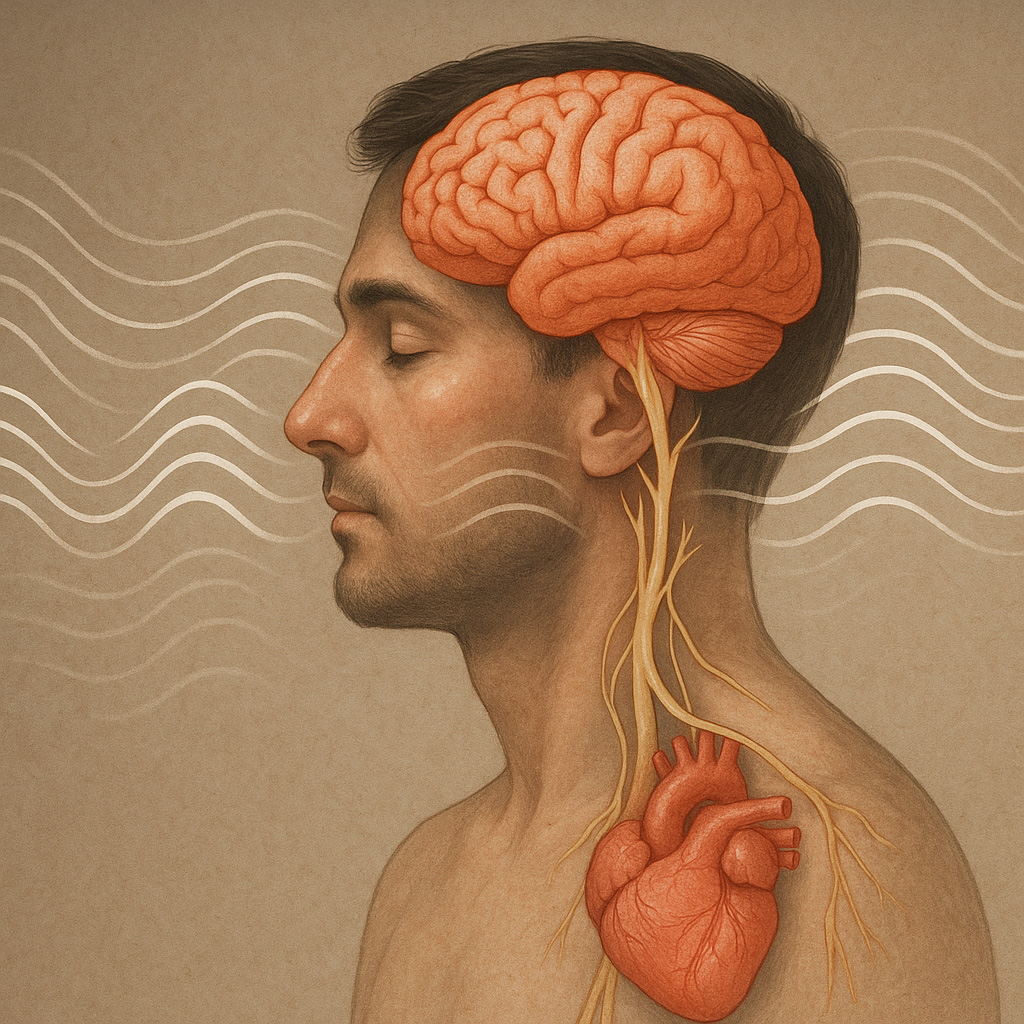
Sound vibration stimulates the vagus nerve, a key regulator of the parasympathetic (“rest and digest”) system. This lowers heart rate, blood pressure, and cortisol levels — shifting the body from stress to recovery mode. - Hormonal Response:
Research in Frontiers in Psychology and Journal of Evidence-Based Integrative Medicine shows that sound meditation reduces cortisol (stress hormone) and increases serotonin and oxytocin, promoting emotional balance and feelings of connection.
How Sound Healing Eases Anxiety
Anxiety is marked by overactivity of the sympathetic nervous system — a constant state of “fight or flight.” Sound healing interrupts this cycle by creating a safe vibrational environment.
- Deep frequencies and drones (gongs, didgeridoos, low crystal bowls) induce grounding.
- Slow, rhythmic sound patterns restore coherence in the brain and heart rhythms.
- Listening to harmonic sound or chanting activates the vagus nerve, signaling safety and calm.
A 2020 clinical trial found that participants who attended sound baths experienced significant reductions in self-reported anxiety within one session.
Sound Healing for Stress Reduction
Stress is not only emotional; it is physiological. Chronic stress dysregulates the endocrine system, leading to fatigue, tension, and burnout. Sound therapy provides a multi-sensory reset:
- Vibration through tissue: Resonant frequencies travel through bones and fascia, relaxing muscle tension.
- Auditory relaxation: Harmonic tones quiet the amygdala (the brain’s alarm center).
- Mindfulness effect: Focusing on sound anchors attention, disengaging repetitive or negative thought patterns.
Neuroimaging studies demonstrate that music and harmonic frequencies reduce activity in the default mode network (DMN) — the part of the brain involved in rumination and worry.
Sound Healing and Depression
Depression often correlates with disrupted neural synchronization and low dopamine/serotonin activity. Sound healing addresses this by stimulating rhythmic coherence and emotional resonance.
- Harmonic overtones produce mild euphoria and emotional release.
- Instruments such as crystal bowls, flutes, and overtone singing generate uplifting frequencies that improve mood.
- Regular sound immersion sessions support neuroplasticity — the brain’s ability to form new, healthier pathways.
A 2017 study from The Journal of Alternative and Complementary Medicine found that 60 minutes of sound meditation using Tibetan bowls significantly reduced tension, anger, and depressive symptoms in participants.
Instruments Most Effective for Mental Balance
| Instrument | Effect | Recommended Use |
|---|---|---|
| Crystal Singing Bowls | Clarity, emotional uplift, chakra balancing | Morning or evening meditation |
| Tibetan Metal Bowls | Grounding, calming, balancing hemispheres | During anxiety episodes |
| Gongs | Deep release, nervous system reset | Group sessions or deep therapy |
| Tuning Forks (528 Hz, 432 Hz) | Cell-level resonance, vagal stimulation | Local or auricular therapy |
| Flutes & Didgeridoos | Heart-opening, rhythmic grounding | Personal or performance-based |
| Chimes & Shakers | Gentle transition sounds | Integrating energy after sessions |
Holistic Integration
Sound healing works best when integrated into a broader wellness practice:
- Pair with breathwork to enhance parasympathetic activation.
- Combine with gentle movement or yoga to release stored tension.
- Journal after sessions to anchor insights and emotional shifts.
Regular exposure (2–3 sessions per week) shows cumulative effects on emotional regulation and sleep quality.
Conclusion
Sound healing offers measurable and profound benefits for anxiety, stress, and depression. Its power lies in its ability to regulate the nervous system, balance brainwaves, and restore emotional harmony — without the need for medication or invasive interventions.
In essence, sound acts as a bridge between physics and emotion, guiding the body and mind back into resonance with their natural rhythm of peace.
Love this post! There’s honestly nothing like a good sound bath or some solid frequencies to completely reset a stressed-out nervous system. It’s amazing how much a simple shift in sound can change your whole mood. Thanks for sharing this!
This was a really interesting read! With so much daily noise and hustle, the idea of using intentional sound to help reset the nervous system makes a lot of sense. Thanks for putting together such a clear breakdown of the benefits.
Is there a recommended frequency or duration for someone who wants to use sound healing to manage everyday stress?
Great question. Different brain states are associated with different ranges of brainwave activity, such as beta (focused and alert), alpha (relaxed wakefulness), theta (deep relaxation and meditation), and delta (deep sleep). Many sound healing recordings are designed to encourage relaxation by supporting a shift toward slower, calmer brainwave states through rhythmic entrainment. While individual responses vary and the scientific evidence is still evolving, choosing recordings created for a specific purpose can help guide the experience more effectively than listening randomly.
For everyday stress, a consistent practice of 15–30 minutes is often a good starting point. If you’re looking for recordings designed for specific goals—such as reducing stress, improving sleep, easing anxiety, or promoting relaxation—you can explore our Frequency Works collection in the website shop. Each track has been carefully created with a particular intention, so you can choose the one that best matches your current needs.
How long does it usually take before people notice benefits from listening regularly?
It varies from person to person. Some people feel calmer or more relaxed during their very first listening session, while for others the benefits develop more gradually with regular practice. Just like meditation or breathwork, consistency is often more important than intensity. Listening for about 15-30 minutes a day over several weeks gives your nervous system time to adapt and respond.
The key is to find recordings that match your goal, whether that’s reducing stress, easing anxiety, or improving sleep, and to make them part of a regular routine. Over time, many people find that consistent listening provides more noticeable and lasting benefits than occasional use.